
From Learning Center to Toolkit: How the REACH Model Was Built
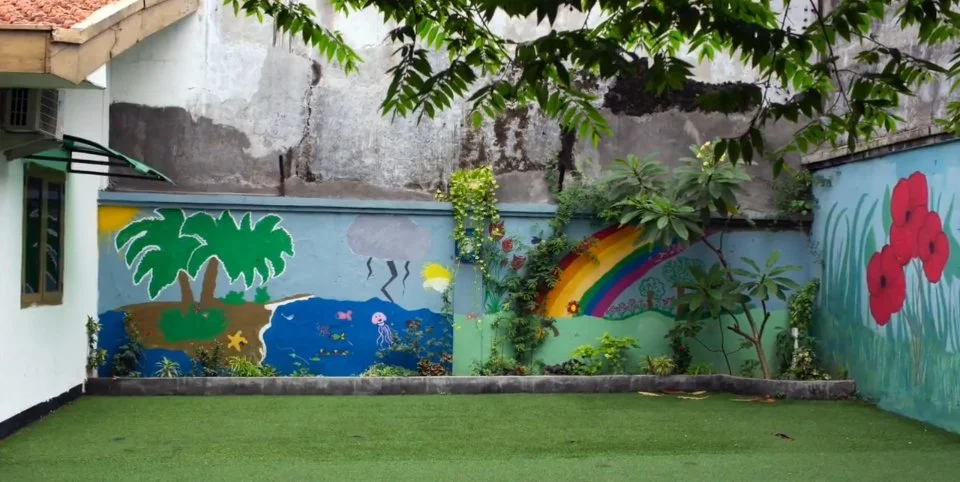
Roshan Learning Center in Jakarta, where the REACH approach first took shape
The REACH Toolkit didn’t start as a framework.
It started during my time at Roshan Learning Center in Jakarta, working with refugee students across different ages, backgrounds, and levels of education.
On paper, the goal was clear: build a program that could support students working toward academic pathways, including GED completion, more importantly to create a bridge to higher education opportunities.
In reality, we were starting from the ground up.
The Reality Inside the Learning Center
Students arrived with very different experiences of education.
Some had strong foundations.
Others had been out of school for years.
Many were carrying uncertainty about what would come next.
Classrooms were mixed.
Resources were limited.
Consistency was hard to maintain.
But one thing was clear.
Students didn’t just need lessons.
They needed direction.
They needed a way forward.
What Was Missing
There was no single system that fit the environment.
There were materials, and there were ideas.
But there wasn’t:
A clear progression across levels
A structure for literacy and numeracy development
A pathway connected to long-term goals like the GED
Tools teachers could rely on day to day
At Roshan, we weren’t building something polished.
We were building something that could hold together.
What We Started Building
The work began with structure.
Not rigid, but clear enough for both students and teachers to follow.
We started to develop:
Learning levels tied to literacy and numeracy benchmarks
A pathway toward GED preparation
Daily routines that brought consistency into the classroom
Simple ways to track progress
At the same time, we focused on the teachers.
Many were community educators without formal training.
Anything we built had to be usable from day one.
What Began to Work
Over time, patterns started to emerge.
Students responded when:
Expectations were clear
Progression was visible
Lessons followed a consistent rhythm
Teachers responded when:
They had a structure to work within
Materials were easy to use
The system supported them instead of adding pressure
And when both came together, classrooms started to shift.
What Changed
As the program developed, we began to see movement.
Students progressed through levels.
Confidence grew.
Attendance became more consistent.
Most importantly, outcomes began to extend beyond the classroom.
Several students were able to complete their academic requirements and continue their education into colleges outside of Indonesia.
That didn’t come from a single lesson or intervention.
It came from having a system that supported learning over time.
What the REACH Toolkit Became
What started as a program at Roshan evolved into something more structured.
The REACH Toolkit became a blueprint.
A way for learning centers to:
Build programs from the ground up
Support teachers without formal training
Create clear academic pathways for students
Connect learning to real opportunities
It wasn’t designed as a fixed curriculum.
It was designed to help something take shape where nothing existed before.
Why This Matters
In many learning centers, the challenge isn’t effort.
It’s starting without a foundation.
Teachers are asked to teach without training.
Programs are expected to run without structure.
Students are expected to progress without a clear path.
Without a system, everything depends on individuals.
And that’s hard to sustain.
Final Thought
The REACH Toolkit came out of a specific place and moment.
But the need it responds to is not unique.
There are many learning centers trying to build something from very little.
The question is not how to create the perfect program.
It’s how to create something that can start, hold, and grow.
That’s what this work continues to focus on.
This experience continues to shape my approach through Apex Learning Lab, focusing on building structured, adaptable learning systems that can be used across different contexts.
