
How the Global SEL Playbook Came to Be
The Global SEL Playbook didn’t start as a product.
It started as a gap I kept running into across very different learning environments.
From working with community organizations in Egypt, to training educators in Nepal, to several years in schools and refugee learning centers in Indonesia, I kept seeing the same pattern.
Teachers were being asked to support students socially and emotionally, but they weren’t given tools that actually worked in their context.
Seeing the Gap Across Contexts
In Egypt, while working with refugee support organizations in Alexandria, there was a clear need to support students beyond academics, especially those dealing with instability and stress. Much of the work focused on psychosocial support and community programs, but it often lacked practical, everyday tools that educators could consistently use.
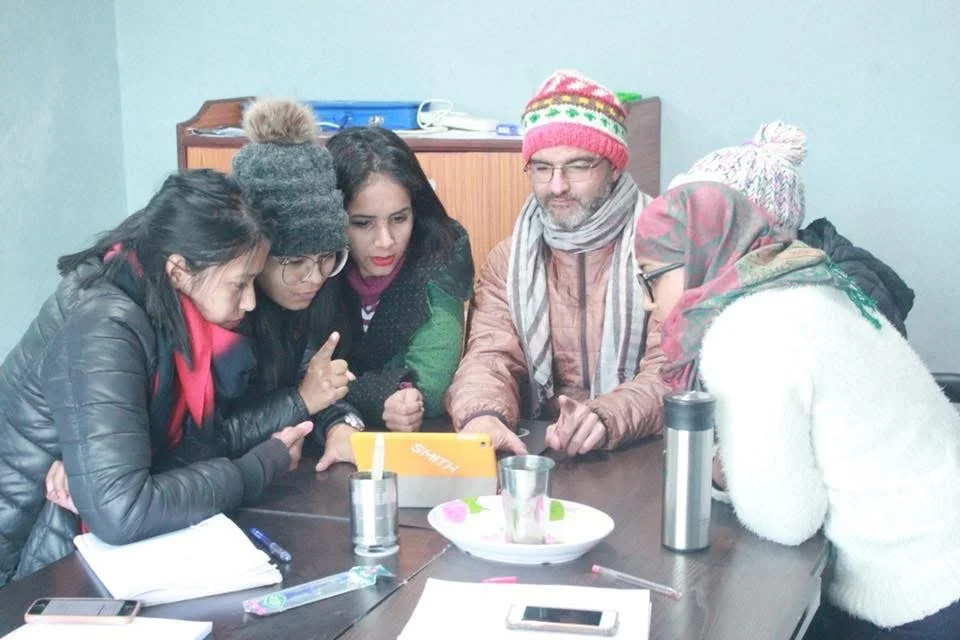
In Nepal, during training sessions with educators in underserved communities, I saw something similar. Teachers were engaged and open to new approaches, but the challenge was not understanding the ideas, it was translating them into daily classroom practice.
The ideas made sense. The “how” was missing.
Where It Became Clear
Indonesia is where everything came together.
Working across international schools and refugee learning centers, I had the chance to test, adapt, and refine approaches over time.
In refugee learning centers especially, the reality was clear:
- Multi-level classrooms
- Limited materials
- High levels of stress among learners
- Teachers with varying levels of training
At the same time, there was a strong need for structure, connection, and consistency.
That’s where SEL wasn’t optional, it was essential. But it had to work within those constraints.
Through this work, including training educators and integrating SEL into daily instruction, I began to see real shifts in engagement, attendance, and classroom climate.
From Activities to a System
At first, I was just trying different activities.
Simple check-ins.
Group games.
Short exercises that didn’t require materials.
Some worked immediately. Others didn’t.
Over time, patterns started to emerge.
What worked tended to be:
- Short and easy to facilitate
- Flexible across age groups
- Low or no-material
- Easy to adapt to different cultural contexts
What didn’t work:
- Overly structured lessons
- Activities that felt forced
- Anything that required ideal conditions
That’s when I realized this wasn’t just a collection of activities.
It was a way of approaching SEL.
What the Playbook Became
The Global SEL Playbook grew out of that experience.
Not as a curriculum.
But as a set of practical tools.
Something a teacher could pick up and use immediately.
Something that could work in:
- A formal classroom
- A refugee learning center
- A community-based program
Without needing perfect conditions.
Why This Work Matters
Across all of these contexts, one thing stayed consistent.
Students don’t learn in isolation.
They bring:
- Stress
- Uncertainty
- Different cultural expectations
- Different levels of support
SEL, when it’s practical and adaptable, helps create the conditions where learning can actually happen.
But only if it fits the reality of the classroom.
The Global SEL Playbook wasn’t designed in one place.
It was shaped across different environments, different challenges, and different communities.
From Egypt, to Nepal, to Indonesia, the lesson was the same:
If a tool isn’t usable in real conditions, it won’t last.
That’s what continues to guide this work.
This perspective continues to shape the tools and training developed through Apex Learning Lab, with a focus on practical, adaptable approaches to education across diverse contexts.
