
Designing Read-Aloud Training for Community Volunteers
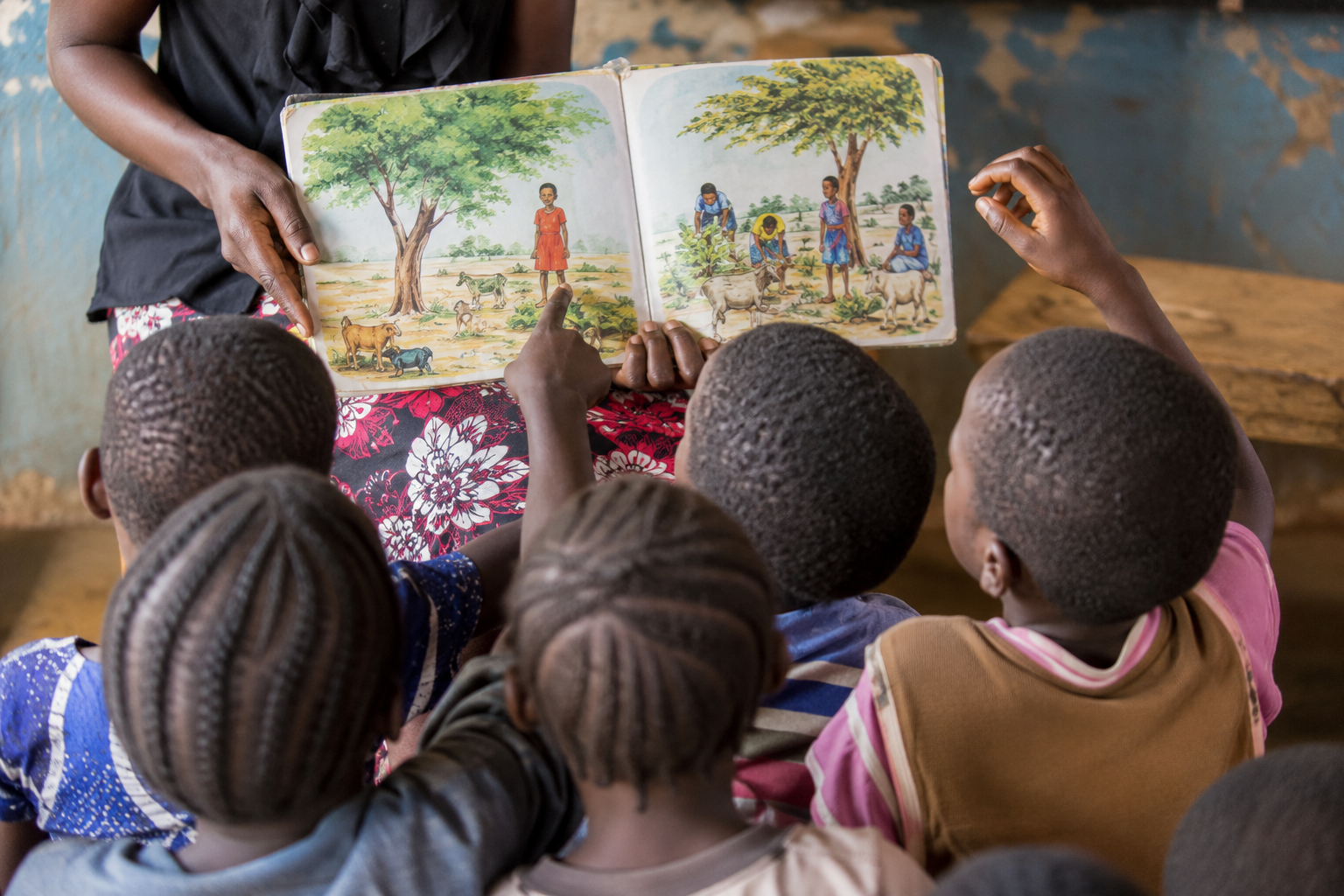
Children participate in an interactive read-aloud in a community learning setting.
Recently, we supported the redesign and facilitation of a virtual literacy training for community volunteers working with children in a multilingual, low-resource setting. The volunteers bring valuable knowledge of their communities, languages, and local storytelling traditions, but many have limited access to formal teacher preparation or ongoing professional learning.
The goal was not simply to explain why reading aloud matters. It was to help volunteers develop practical strategies they could use immediately: introducing a story, involving children before and during reading, asking purposeful questions, responding to different learning levels, and connecting the story to a simple follow-up activity.
1. Begin with what volunteers already know
Participants connected strongly with the relationship between oral storytelling and reading aloud. This created an accessible starting point because storytelling was already familiar, culturally meaningful, and rooted in community experience.
2. Participation needs to be deliberately designed
The most valuable moments came when volunteers shared ideas, responded to situations, and connected the strategies to their own experiences. Effective volunteer training cannot rely only on explanation. Participants need opportunities to discuss, practise, plan, and learn from one another.
3. Training must reflect the conditions of implementation
Strategies were designed for settings where volunteers may have one phone, limited internet access, few printed materials, and children working at different learning levels. The question was therefore not only, “Is this an effective literacy strategy?” but also, “Can a volunteer realistically use it in this setting?”
This experience reinforced that effective literacy training is not defined by how much information is presented. Its value lies in whether volunteers leave with a small number of clear, adaptable practices they feel confident using with children. The next step is to extend that learning through collaborative planning, practical exercises, and continued peer support.
